
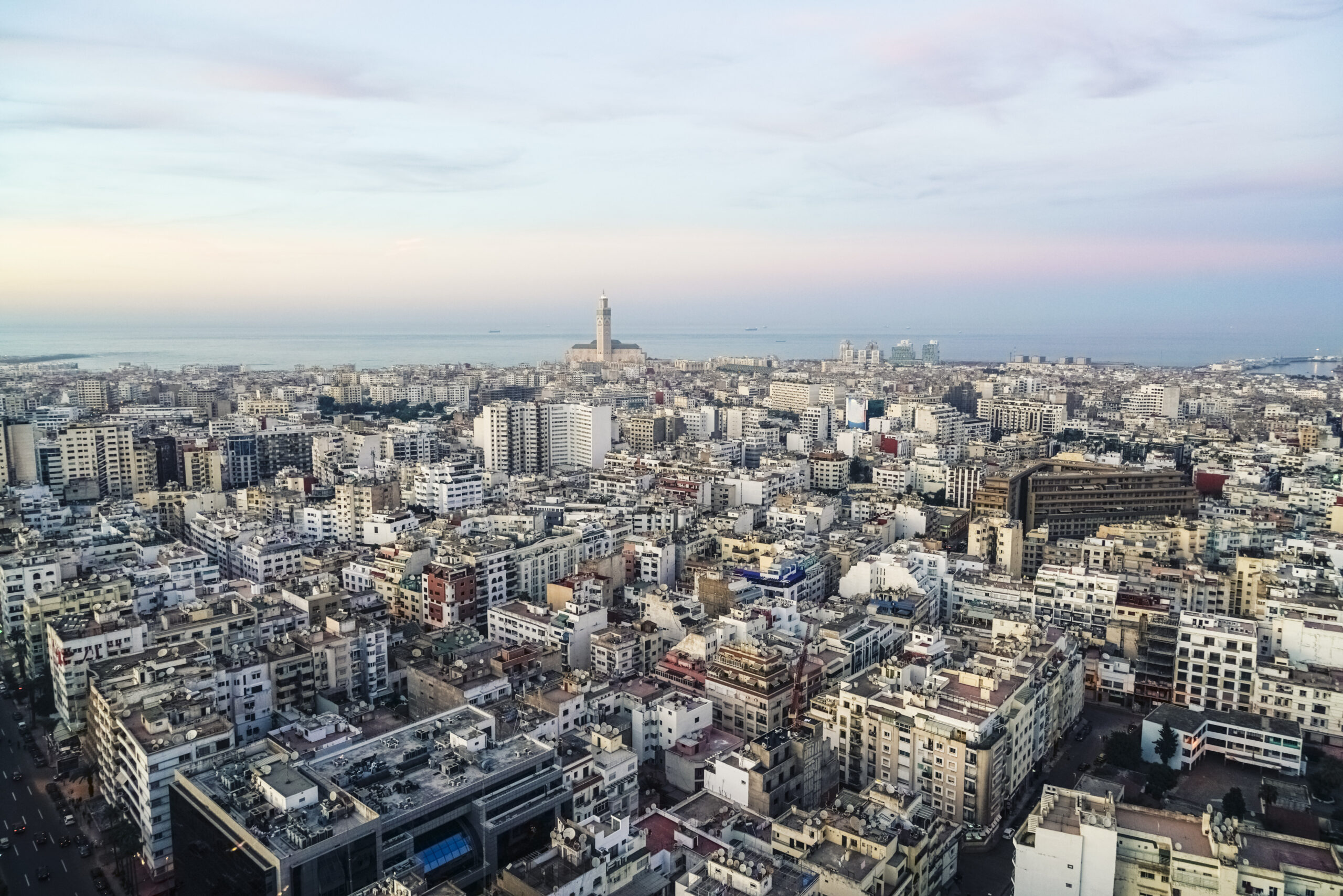
Morocco has become one of the most talked-about remote work destinations in the world — and for good reason. Fast internet, affordable costs, warm weather for most of the year, and a medina café around every corner. But not every city works equally well for everyone.
Whether you’re a freelancer chasing slow mornings over mint tea, a developer who needs reliable fibre, or someone who wants to combine productive days with weekend surf trips, this guide will help you choose the right city — honestly, without the hype.
These are the best cities in Morocco for remote work right now, rated by what actually matters: connectivity, cost of living, work-friendly spaces, and day-to-day comfort.
At a Glance — Morocco for Remote Workers
Quick Comparison: All 8 Cities at a Glance
Not all cities in Morocco were built with the laptop crowd in mind. Here’s how the main options stack up before we go deeper into each one.
← Swipe left to see all columns →
| City | Wi-Fi | Cost | Cafés/Cowork |
|---|---|---|---|
| Marrakech | Strong | Mid | ⭐⭐⭐⭐⭐ |
| Casablanca | Excellent | Mid–High | ⭐⭐⭐⭐ |
| Rabat | Strong | Mid | ⭐⭐⭐⭐ |
| Fez | Decent | Low | ⭐⭐⭐ |
| Tangier | Decent | Mid | ⭐⭐⭐ |
| Taghazout | Variable | Low–Mid | ⭐⭐⭐ |
| Agadir | Strong | Mid | ⭐⭐⭐ |
| Essaouira | Weak | Low | ⭐⭐ |
1. Marrakech — The Remote Worker’s Favourite
Marrakech
Marrakech is, for most people, the default answer to “best city in Morocco for remote work” — and it earns that reputation. The city has an astonishing number of cafés that welcome laptop workers, many of them tucked inside restored riads with courtyard seating and stable Wi-Fi. The medina is noisy and stimulating; Gueliz, the modern district, is calm and practical.
Wi-Fi speeds vary significantly depending on where you stay. The new ville (Gueliz and Hivernage) consistently offers faster, more reliable connections than the old medina. If you plan to spend months working from Marrakech, renting an apartment in Gueliz with your own fibre line makes more sense than relying on riad-provided internet.
The cost of living sits in the middle range for Morocco. A coworking day pass runs between 80–150 MAD ($8–$15). A decent lunch costs 40–70 MAD. Monthly apartment rentals in the modern city start around 4,000 MAD for something comfortable. The tradeoff is overstimulation — Marrakech is intense, and some remote workers find themselves more distracted than productive after a few weeks.
Best for: Creatives, designers, content creators, anyone who feeds off atmosphere and vibrant surroundings.
2. Casablanca — The Business Capital for Serious Work
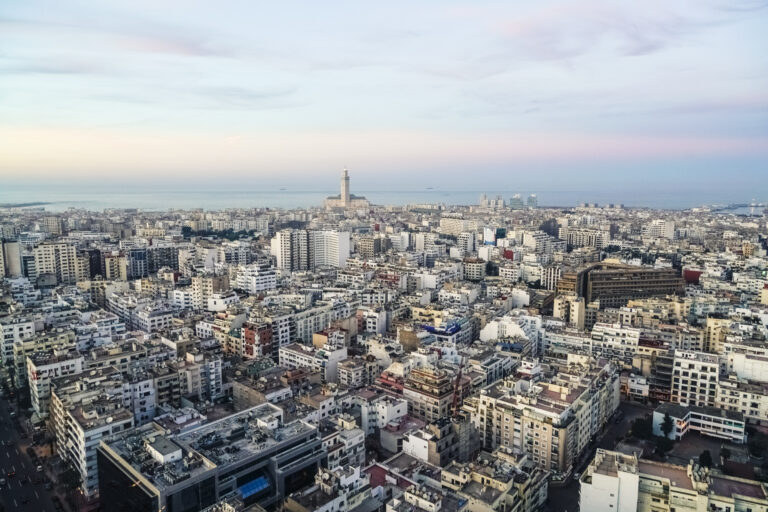
Casablanca
Casablanca is Morocco’s economic engine, and that shows in its infrastructure. Internet speeds here are the best in the country — fibre connections are widely available, 5G coverage is growing, and dedicated coworking spaces are increasingly professional. If you have video calls, large file uploads, or need a truly reliable connection, Casa is your answer.
It’s not the most atmospheric city in Morocco, and some remote workers feel it lacks charm. But what it lacks in romance it makes up for in functionality. You can find everything you need here: fast supermarkets, reliable transport, international restaurants, and a growing expat and digital nomad community centred around Maarif and Racine districts.
Costs are higher than other Moroccan cities — think closer to a budget European city rather than a budget travel destination. Monthly rent for a comfortable one-bedroom in a central neighbourhood runs 5,000–8,000 MAD. But value for money is still strong compared to Paris, London, or Lisbon. If you’re thinking of basing yourself here for work, read our full Casablanca cost breakdown to set realistic expectations.
Best for: Developers, analysts, people in client-facing remote roles who need bulletproof connectivity and professional infrastructure.
3. Rabat — Calm, Educated, Underrated
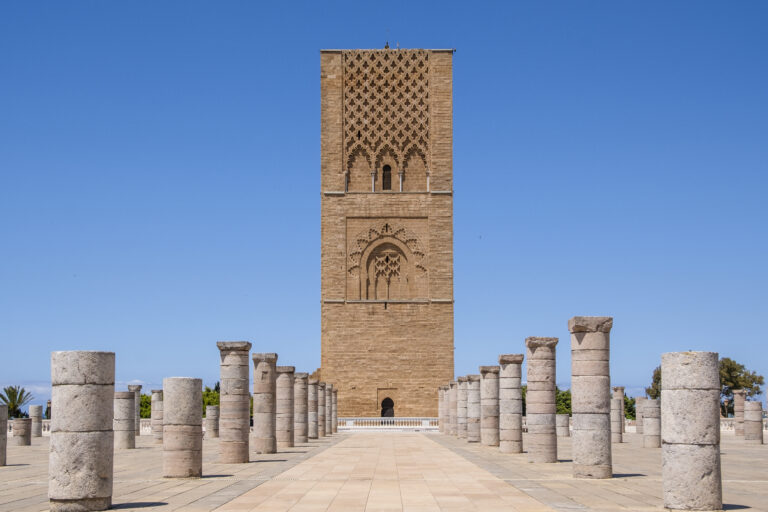
Rabat
Morocco’s capital doesn’t always make the short list when people search for the best city to visit in Morocco — but for remote workers who plan longer stays, Rabat is arguably the most liveable city in the country. It’s clean, relatively calm, and has a large educated population that makes it genuinely easy to build social connections.
Wi-Fi in Rabat is strong and consistent. The Agdal and Hassan neighbourhoods have a good selection of quiet cafés where working for three or four hours without being bothered is entirely normal. There’s also a growing number of coworking spaces catering to Morocco’s tech and startup scene, many of which offer monthly memberships at reasonable rates.
Day-to-day life here feels less hectic than Marrakech or Casablanca. You can walk to the beach at Salé, visit the medina without getting lost for hours, and generally keep your stress levels low. Check the Rabat neighbourhood guide before you book — the choice of district makes a big difference to your day-to-day experience.
Best for: Professionals on longer stays, couples, people who want a genuine local experience without tourist intensity.
4. Fez — The Budget Option with Immense Character
Fez
Fez is one of the best cities in Morocco for remote workers on a tight budget. Accommodation is cheap — riads in the medina can be rented for a fraction of what you’d pay in Marrakech — and daily expenses like food, transport, and coffee are all noticeably lower. If you’re watching your runway or trying to extend how long your savings last, Fez makes a compelling case.
The catch: internet infrastructure in the ancient medina (Fes el-Bali) is inconsistent. The old city wasn’t designed with fibre cable runs in mind. Many nomads who love Fez solve this by staying in the Ville Nouvelle, where connectivity is reliable, and visiting the medina for atmosphere and meals. Getting a local SIM with a 4G data plan as a backup is wise here regardless of where you stay — see our Morocco eSIM guide for the best options.
The atmosphere for creative and reflective work is extraordinary. The scale and depth of Fez’s medina — the largest in the world still largely intact — creates a kind of creative pressure that writers, artists, and researchers tend to find unusually productive. There’s less distraction here than in Marrakech, and the city rewards people who stay long enough to understand it.
Best for: Budget-conscious nomads, writers, researchers, people drawn to deep history and authentic Moroccan life.
5. Taghazout — Surf, Sun, and a Growing Work Scene
Taghazout
Taghazout is one of Morocco’s most specific remote work destinations — it suits a particular type of nomad perfectly, and it suits others not at all. This small surf village north of Agadir has transformed over the past decade from a backpacker stopover to a year-round base for location-independent workers who want to surf in the morning and work in the afternoon.
Internet here is improving but still variable. Many accommodations now advertise fast Wi-Fi, but real-world speeds can fluctuate. The honest advice: test your connection on arrival, keep a backup 4G SIM, and avoid scheduling heavy calls for the first few days until you know what you’re working with. The village has a handful of casual café-workspaces and some purpose-built surf-and-work residences that offer better infrastructure.
Costs are low, the food is simple and good, and the pace of life is exactly what it sounds like. You’re not here for a dynamic urban experience — you’re here to decompress, surf, and work with the sound of waves in the background. Read our complete Taghazout guide to understand the village layout before you book accommodation.
Best for: Surfers, slow travellers, people recovering from burnout who still need to stay productive.
6. Tangier — The Literary City with a New Edge
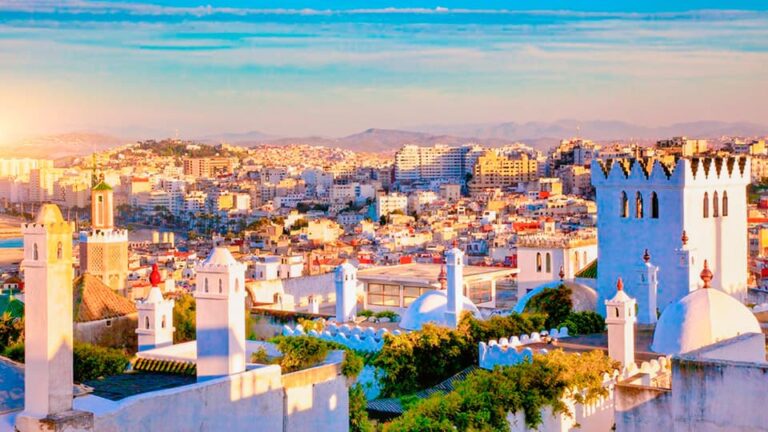
Tangier has always attracted writers and artists drawn to its mix of cultures, its coastal drama, and its reputation as a place slightly outside the ordinary. That energy hasn’t entirely disappeared, even as the city has grown and modernised significantly in recent years.
For remote workers, Tangier offers decent connectivity — particularly in the Ville Nouvelle and along the coastline — a reasonable cost of living, and a distinctly different atmosphere to the imperial cities further south. The city’s most practical advantage for European nomads is proximity: a 35-minute ferry ride to Tarifa, Spain, makes Tangier the easiest Moroccan base for people who want to stay connected to both continents.
The café culture here is strong, and Tangier has a more open social atmosphere than some other Moroccan cities. Solo remote workers tend to feel comfortable faster here. For a full picture of the city before you arrive, the Tangier city guide covers everything you’ll need to know.
Best for: Writers, solo travellers, people who want easy access to Europe without giving up the Moroccan experience.
✦ Practical Tips for Working Remotely in Morocco
- Buy a local SIM (Maroc Telecom or Orange) on arrival — 4G data is cheap and covers most cities well. A 20GB plan costs around 40–60 MAD. Alternatively, check our Morocco eSIM guide to set up connectivity before you land.
- Test your accommodation Wi-Fi before committing to a long stay. Ask specifically about upload speeds if you have regular video calls.
- Power cuts do happen occasionally, particularly in older medina buildings. A small laptop battery pack is worth carrying.
- Most coworking spaces in Morocco offer daily and monthly rates — monthly passes typically run 600–1,200 MAD ($60–$120), excellent value compared to Europe.
- Moroccan working hours lean late — cafés peak around mid-afternoon. Early risers get the best seats and quietest conditions for focused work.
- Most nationalities receive a 90-day visa-free entry. Always verify current requirements with your embassy before travelling, as rules can change.
Honourable Mentions: Essaouira and Agadir
Essaouira
Essaouira is beautiful — wind-battered, blue-and-white, deeply romantic. But internet infrastructure outside a handful of purpose-built guesthouses remains unreliable. If you have low connectivity demands and can manage on 4G for calls, Essaouira is a wonderful place for a few weeks. As a primary work base for anyone with regular video calls or large data needs, it’s frustrating. Think of it more as a weekend retreat than a long-term base.
Agadir
Agadir is Morocco’s modern resort city — rebuilt after the 1960 earthquake, with wide boulevards, a long sandy beach, and solid infrastructure. Wi-Fi is generally reliable, and the city has a relaxed, resort-town energy that some remote workers love and others find a little sterile. If you need comfort, predictability, and beach access in equal measure, Agadir delivers. Read the Agadir city guide for a fuller picture of what life there actually looks like.
Frequently Asked Questions
Final Thoughts
Morocco rewards remote workers who take the time to find the city that fits them — not just the one that appears first in a search result. Marrakech has the atmosphere and the cafés. Casablanca has the infrastructure. Rabat has the liveable calm. Fez has the depth and the value. Taghazout has the ocean.
None of them are perfect. All of them offer something a European or North American city simply cannot replicate at this price. If you’ve been thinking about it, the honest answer is: just go. Spend a month. Morocco has a way of revealing itself slowly — and most people who try it for a few weeks end up rearranging their plans to stay much longer.
Start with our Morocco Travel Guide 2026 if you’re still in the planning stage, or jump straight into the city that caught your eye above.

Leave a Reply