
Why Visit Casablanca?
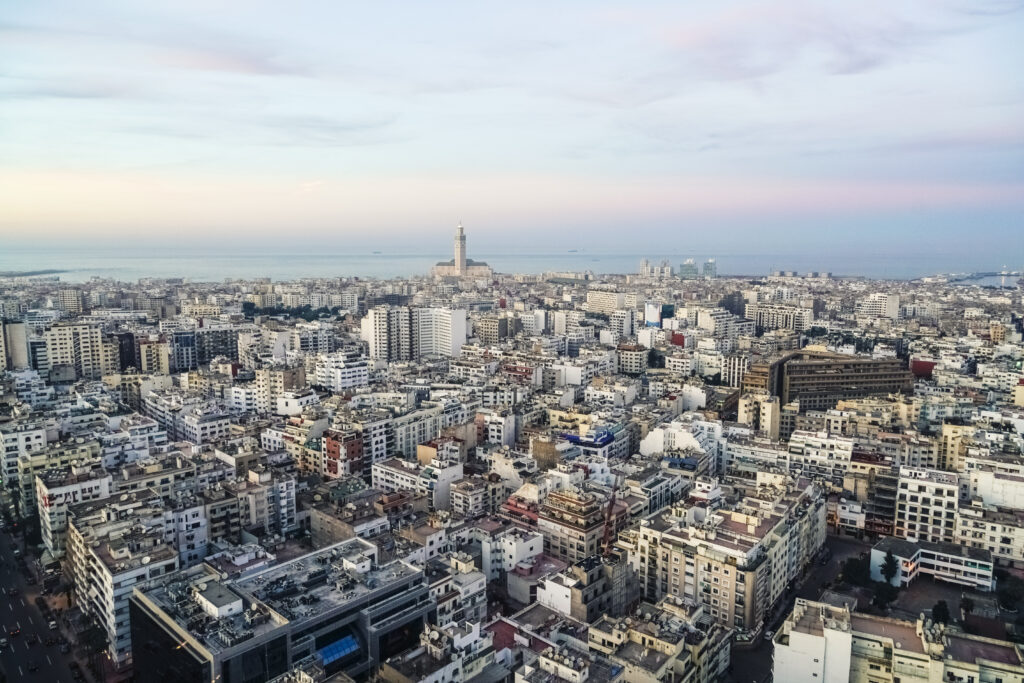
Casablanca is Morocco’s largest city and its economic center. It is where much of the country’s modern life takes shape, from business and industry to media and international exchange. Unlike imperial cities known for ancient walls and historic medinas, Casablanca represents contemporary Morocco, active, ambitious, and constantly evolving.
Visiting Casablanca helps travelers understand how Morocco functions today. The city reflects real daily life, professional routines, and social diversity. Tradition is still present, but it adapts to a fast-moving urban environment. Casablanca is worth visiting for those who want a complete and realistic picture of Morocco beyond history and symbolism.
Where Is Casablanca & Why Its Location Matters
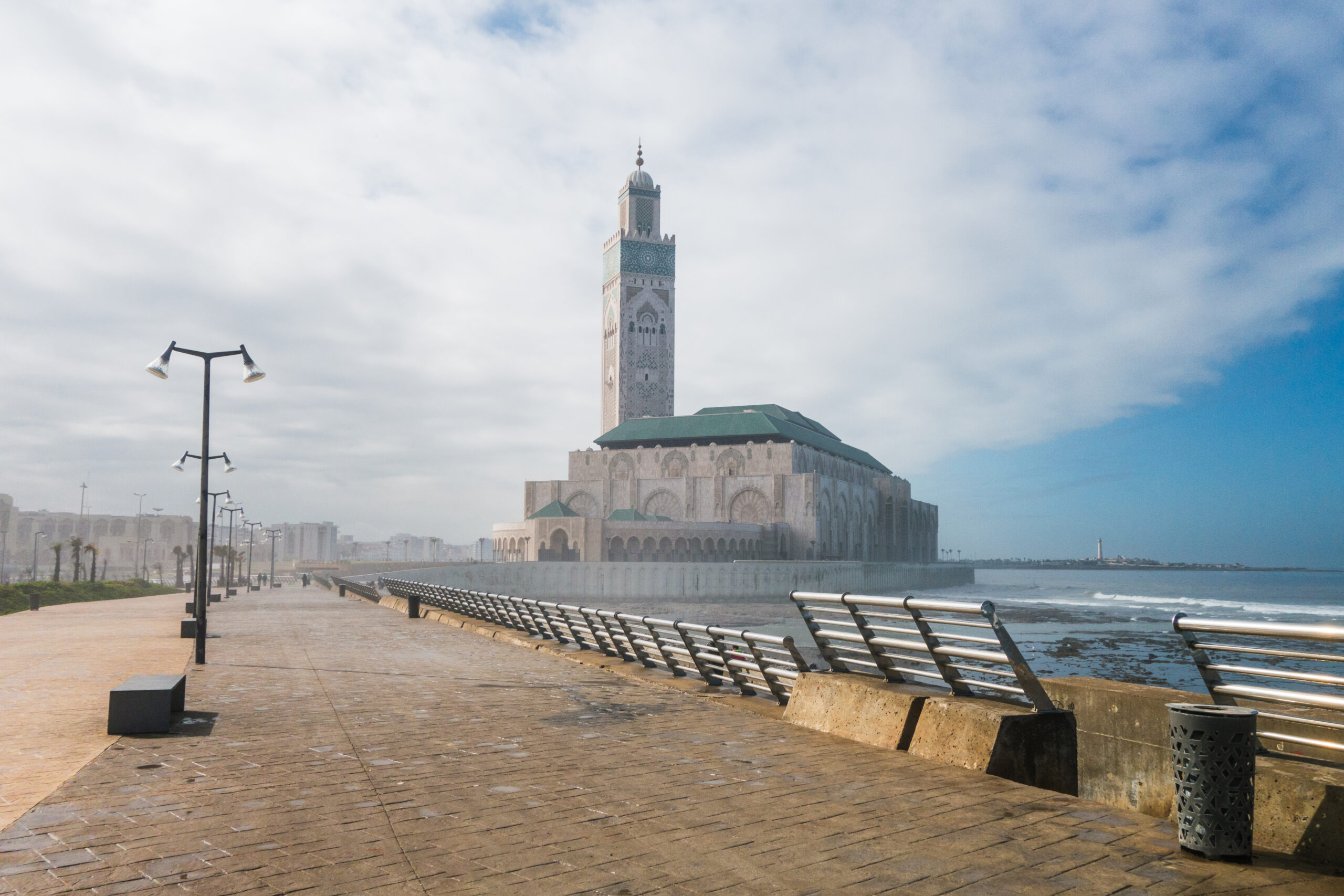
Casablanca is located on the Atlantic coast of western Morocco. Its position facing the ocean has shaped its identity more than any royal dynasty. The city developed around its port, which became the most important in the country.
The Atlantic Ocean connects Casablanca to Europe, Africa, and the Americas. This access encouraged trade, migration, and investment, especially during the late nineteenth and twentieth centuries. As a result, Casablanca grew rapidly and became Morocco’s most populated and economically powerful city.
The coastal location also influences climate and lifestyle. Ocean air moderates temperatures, and daily life is closely linked to maritime activity and global exchange.
Short but Meaningful History & Cultural Context
Casablanca’s history is relatively recent compared to cities like Fez or Marrakesh. The area was originally known as Anfa, a small settlement that existed for centuries before modern development began.
Modern Casablanca took shape during the early twentieth century, particularly under the French Protectorate. Large-scale urban planning introduced ports, railways, wide avenues, and administrative buildings. This period transformed Casablanca into Morocco’s industrial and commercial engine.
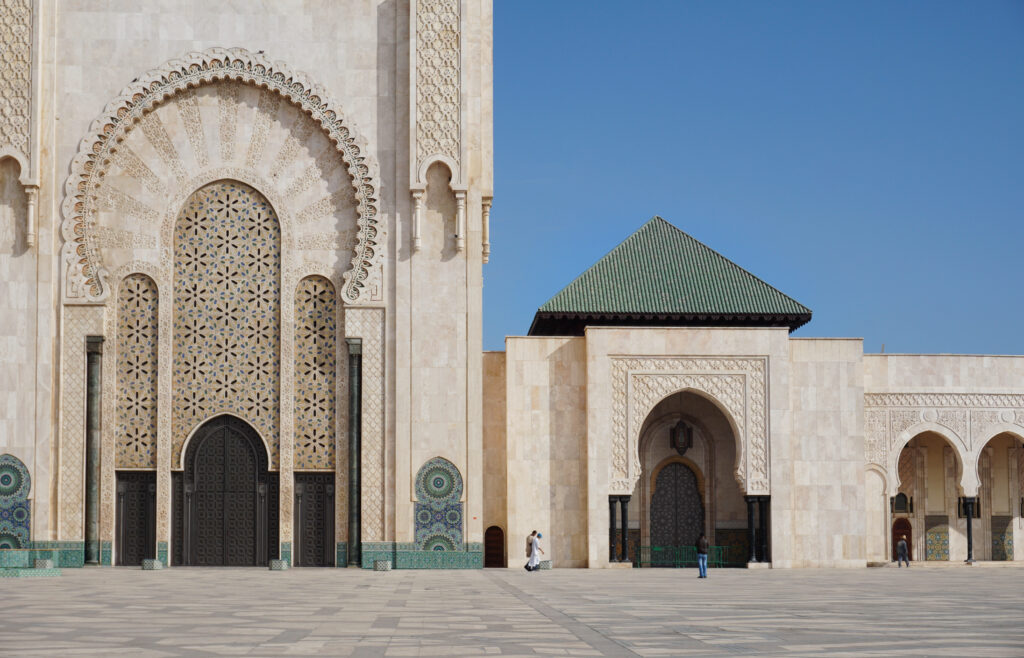
One of the city’s most important landmarks is the Hassan II Mosque, completed in the 1990s. Built partly over the Atlantic Ocean, it reflects modern engineering combined with traditional Moroccan craftsmanship. Casablanca’s history tells the story of Morocco’s transition into modern urban life.
Atmosphere & Daily Life
Daily life in Casablanca is fast-paced and structured. Mornings begin early, with traffic filling the streets, cafés opening, and people heading to work. The city follows professional schedules, and time plays an important role in daily routines.
Neighborhoods differ greatly in atmosphere. Central districts are busy and commercial, while residential areas feel calmer. Coastal zones offer space and fresh air, especially in the evenings.
Sounds of traffic, conversation, and construction are constant. Moroccan expressions such as salam alaykoum, labas?, and inshallah are part of everyday speech, even in professional environments. Casablanca feels energetic and focused, reflecting its role as a working city.
Culture, Traditions & Local Mentality
Casablanca reflects a modern Moroccan mentality shaped by diversity. People from all regions of the country live and work here, bringing different accents, habits, and traditions. This diversity creates openness and adaptability.
Despite its modern character, cultural values remain strong. Family ties are important, hospitality is respected, and social courtesy plays a role in daily interactions. Religious practices continue alongside professional life, shaping daily rhythm without stopping productivity.
Visitors are usually treated with professionalism and direct communication. Respect, patience, and awareness of social norms help interactions feel smooth.
Weather & Best Time to Travel
Casablanca has a mild Atlantic climate. Temperatures remain moderate throughout the year, with cooler summers and gentle winters compared to inland cities. Ocean breezes help regulate heat and humidity.
Rainfall occurs mainly in winter months, while spring and autumn are comfortable. Because of this climate, Casablanca can be visited year-round without extreme weather conditions.
Weather affects daily life less dramatically than in desert or inland regions, allowing consistent urban activity.
How to Get to Casablanca
Casablanca is Morocco’s main international gateway. It is served by the country’s largest airport and has strong rail and road connections with all major cities.
Its transport infrastructure reflects its national and international importance and makes it one of the easiest Moroccan cities to reach.
Getting Around & Transport
Casablanca is a large city, and distances can be long. Movement includes walking, taxis, trams, and regional trains. Public transport plays a key role in daily life.
Traffic congestion is common during peak hours. Understanding the city’s rhythm helps visitors plan movement realistically and avoid unnecessary stress.
Accommodation in Casablanca
Accommodation in Casablanca reflects its residential and business-oriented character. Different districts offer different atmospheres, from dense urban areas to quieter coastal neighborhoods.
The area chosen often influences convenience, pace, and access to services and public spaces.
Perfect Holiday Duration in Casablanca
Casablanca does not require a long stay to understand its role. Short stays allow visitors to grasp its atmosphere and function, while longer stays provide deeper insight into modern Moroccan urban life.
The city is best approached with realistic expectations and curiosity rather than a search for traditional sightseeing alone.
Casablanca Dress Code & Culture
Dress in Casablanca is generally urban and flexible. Professional clothing, casual wear, and modern styles are common, especially in business districts.
Modesty is still appreciated in religious and traditional settings. Practical and respectful clothing aligns well with everyday social norms.
Casablanca for Solo Travelers, Couples & Families
Casablanca suits many travel styles. Solo travelers benefit from structure and services, couples enjoy coastal and urban spaces, and families find access to amenities and facilities.
The city’s size and diversity allow visitors to adapt their experience to personal needs.

Leave a Reply