
Why Visit Fez?
Fez is one of Morocco’s oldest and most culturally significant cities. It is often described as the spiritual and intellectual heart of the country. Unlike cities shaped mainly by trade or modern industry, Fez developed through knowledge, religion, craftsmanship, and tradition.
People visit Fez to understand Morocco’s deepest historical layers. The city preserves a way of life that has continued for centuries with remarkable continuity. Streets, schools, workshops, and religious institutions still function much as they did in the past. Fez is worth visiting for travelers who want depth, authenticity, and a direct connection to Morocco’s cultural foundations.
Where Is Fez & Why Its Location Matters
Fez is located in northern inland Morocco, between the Rif Mountains and the Middle Atlas range. Its position placed it at the crossroads of important trade routes linking the Mediterranean, the Sahara, and the Atlantic regions.
This inland location protected Fez from coastal invasions while allowing it to grow as a center of learning and governance. Access to fertile land and water sources supported long-term settlement and population growth. Because Fez was less exposed to foreign maritime influence, it maintained strong religious and cultural independence.
Even today, the surrounding hills and plains influence the city’s climate, architecture, and daily rhythm.
Short but Meaningful History & Cultural Context
Fez was founded in the late 8th century and quickly became a major center of Islamic learning and political power. It served as a capital for several Moroccan dynasties and attracted scholars, artisans, and traders from across the Islamic world.
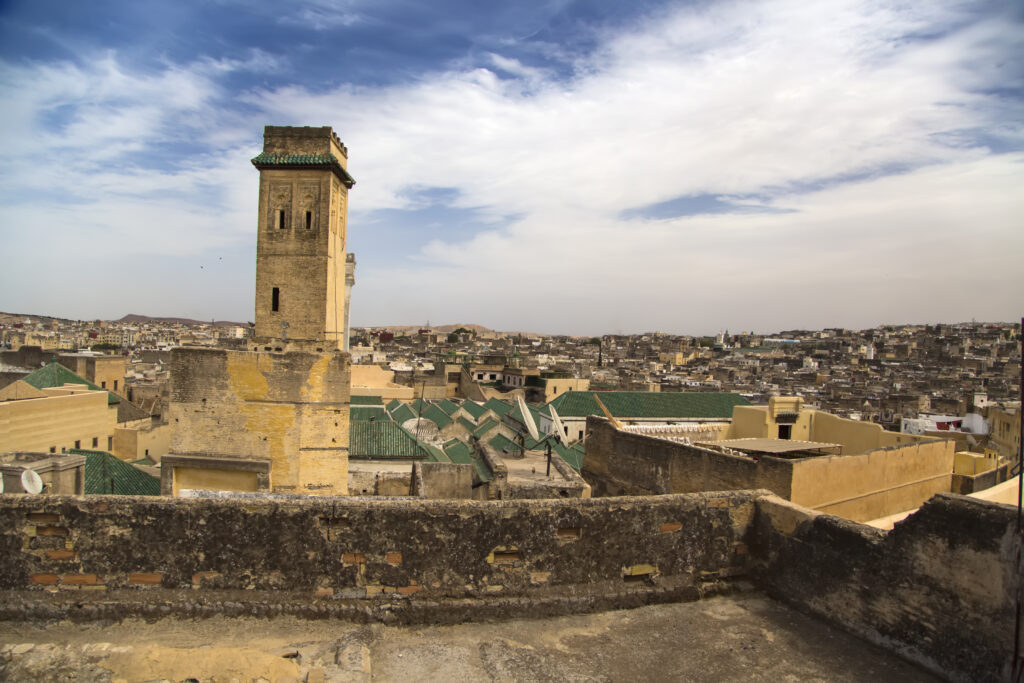
One of the city’s most important institutions is the Al Quaraouiyine Mosque, established in the 9th century and recognized as one of the oldest continuously operating universities in the world. This institution shaped Fez as a city of knowledge, law, and religious study.
Over centuries, Fez expanded through distinct districts, each reflecting different historical phases. Despite political changes, the city preserved its religious authority and cultural influence, becoming a reference point for Moroccan identity.
Atmosphere & Daily Life
Daily life in Fez follows a rhythm deeply connected to tradition. Mornings begin early, with workshops opening, markets becoming active, and religious life shaping the pace of the day. Afternoons slow down, while evenings bring quieter social interaction.
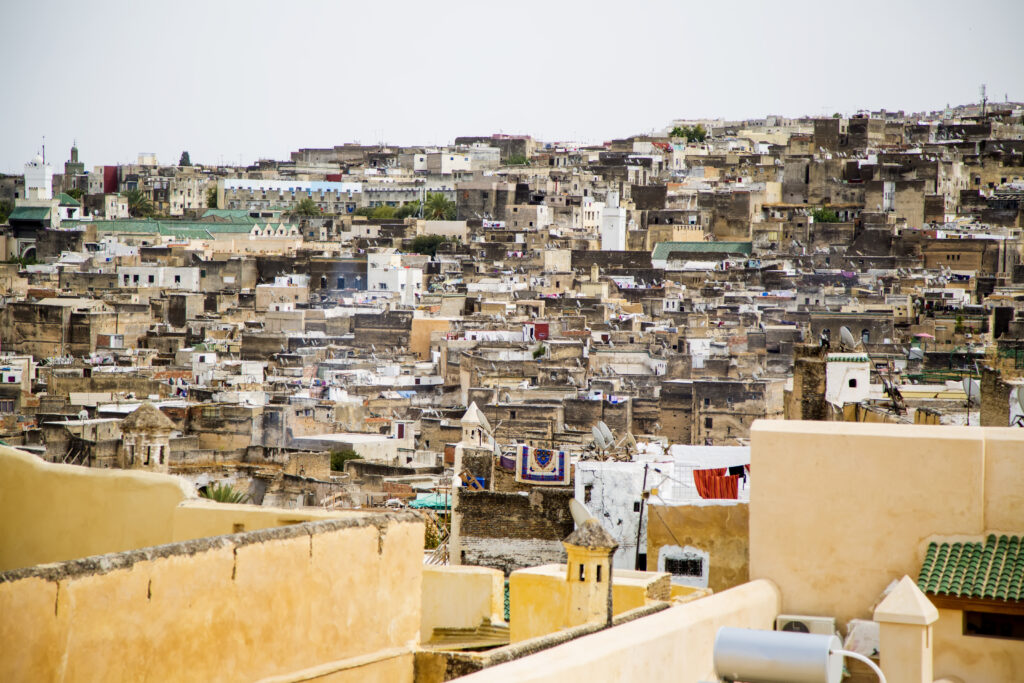
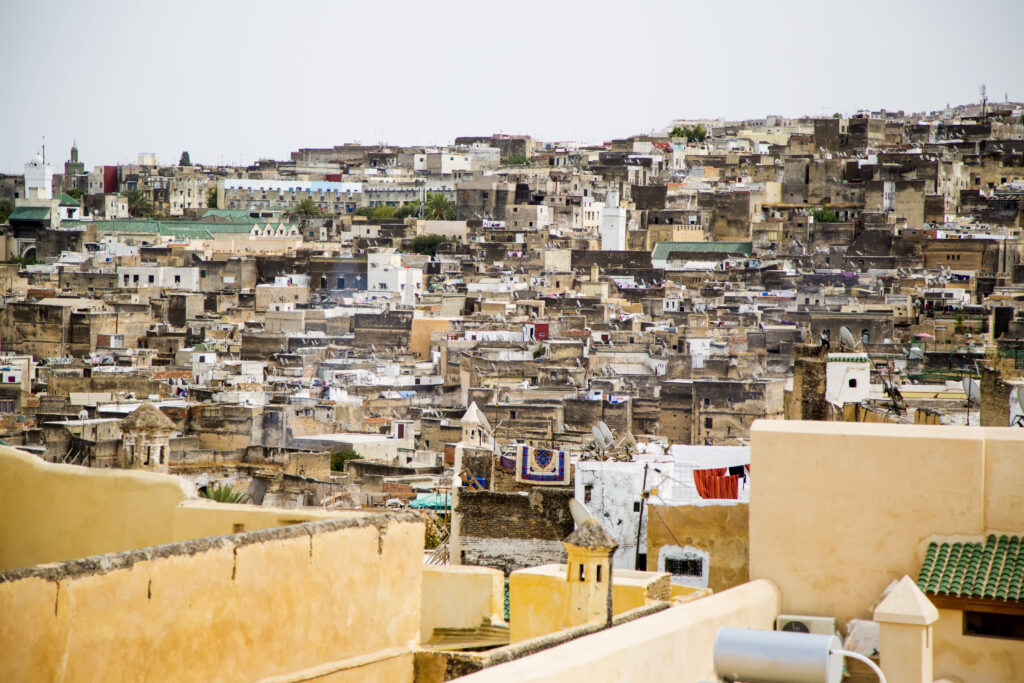
The old medina, known as Fes el-Bali, is dense and intricate. Narrow streets connect homes, mosques, schools, and workshops. Movement happens mostly on foot, and daily interactions are frequent and personal.
Sounds in Fez are subtle but constant: voices, tools, footsteps, and calls to prayer. Moroccan expressions such as salam alaykoum, labas?, and allah ybarek fik are commonly heard, reflecting respect and social closeness.
Culture, Traditions & Local Mentality
Fez represents a conservative and tradition-focused Moroccan mentality. Knowledge, religion, and craftsmanship are highly respected. Family reputation, education, and moral behavior play an important role in social life.
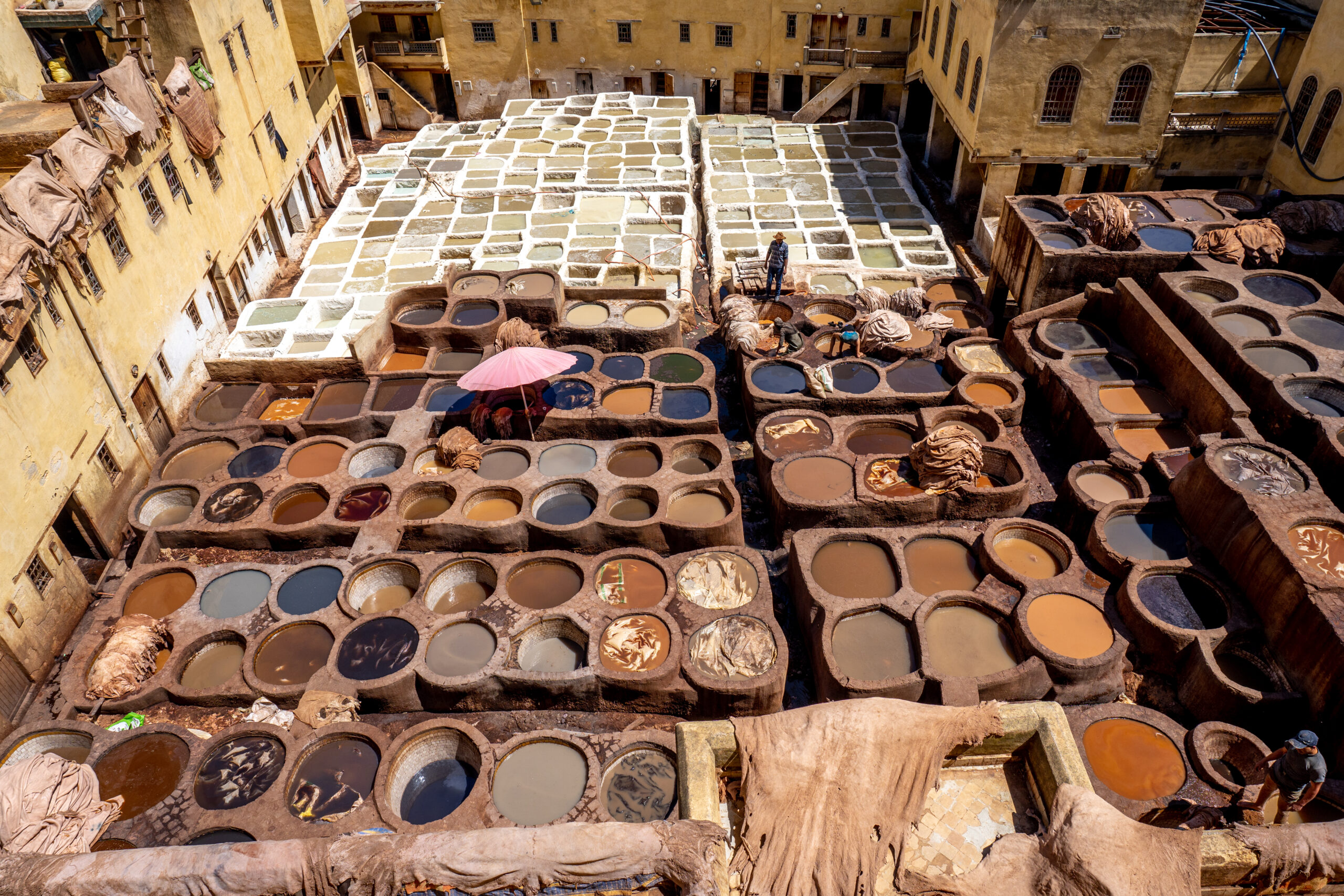
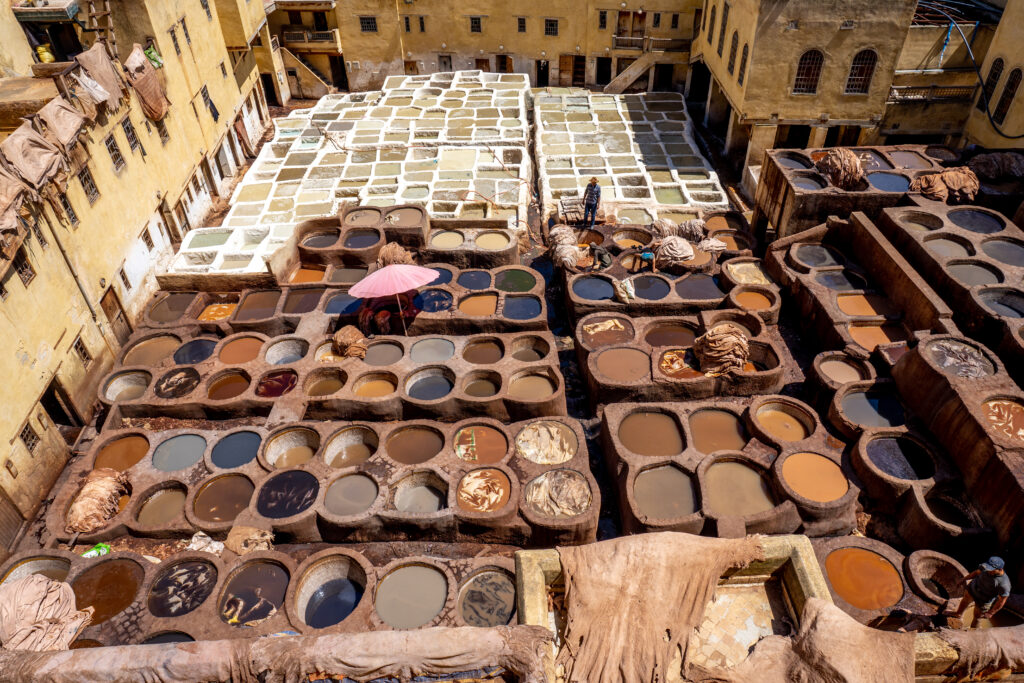
Traditions are preserved through practice rather than performance. Crafts such as leatherwork, metalwork, and textile production continue as everyday professions. Religious education remains active, shaping values and behavior.
Visitors often experience Fez as reserved but deeply respectful. Patience, modest behavior, and cultural awareness are especially appreciated in this city.
Weather & Best Time to Travel
Fez has a continental climate. Summers can be very hot, while winters are cooler and sometimes cold at night. Rainfall is more common in winter than in southern cities.
Spring and autumn usually offer more comfortable conditions. Because of the climate, daily life in Fez adapts strongly to seasons, with schedules changing to avoid extreme heat or cold.
Understanding this climate helps visitors move at a pace that fits local habits.
How to Get to Fez
Fez is accessible by air, train, and road. It is connected to major Moroccan cities through national transport networks, although travel times can be longer due to its inland location.
Its position makes Fez less rushed and more insulated from rapid urban expansion.
Getting Around & Transport
Movement in Fez depends on the area. Inside the historic medina, walking is the primary way to move, as streets are narrow and vehicle access is limited. Outside the old city, taxis and local transport are used.
Navigating Fez requires patience and orientation rather than speed. The city is best explored slowly.
Accommodation in Fez
Accommodation in Fez reflects the city’s historic character. Different areas offer different atmospheres, from deeply traditional environments near the old medina to more open and modern districts.
The choice of location affects daily rhythm, noise levels, and connection to historic life.
Perfect Holiday Duration in Fez
Fez rewards time and attention. Short stays offer an introduction, but longer stays allow deeper understanding of culture, daily routines, and social structure.
The city reveals its meaning gradually, making slow travel especially valuable.
Fez Dress Code & Culture
Dress in Fez is generally conservative. Modest clothing is common, especially within the old city and near religious institutions. Practical clothing suited for walking is also important.
Respectful dress helps visitors feel comfortable and welcomed in traditional neighborhoods.
Fez for Solo Travelers, Couples & Families
Fez suits travelers who enjoy culture, history, and observation. Solo travelers benefit from awareness and preparation, couples often appreciate the depth and atmosphere, and families experience strong community values.
The city favors calm exploration rather than fast-paced tourism.
Safety Awareness in Fez
Fez is generally safe, but its complex layout requires attention and awareness. Understanding local behavior, respecting customs, and moving calmly help avoid misunderstandings.
The medina functions as a close community where respectful conduct is important.
Most Popular Excursions from Fez
Fez’s location allows access to mountain regions, agricultural plains, and historic towns. These areas reflect the city’s role as a cultural and regional center.
The surroundings provide historical and geographic context rather than dramatic contrast.
Final Reflection – Why Fez Is Worth Understanding
Fez is not a city that changes to meet expectations. It asks visitors to adapt, observe, and learn. Its value lies in continuity, discipline, and cultural depth.
Understanding Fez means understanding Morocco’s intellectual and spiritual roots. For travelers who seek meaning, tradition, and authenticity, Fez offers insight that few other cities can match.

Leave a Reply