
Why Visit Marrakesh?
Marrakesh is one of Morocco’s most symbolic and historically important cities. For nearly a thousand years, it has played a central role in politics, religion, trade, and culture. Unlike cities that exist mainly for visitors, Marrakesh is a living city where daily life continues inside ancient walls and long-established neighborhoods.
Travelers visit Marrakesh to understand Morocco at its core. The city offers a strong sense of identity shaped by history, geography, and tradition. Public spaces remain active, crafts are still practiced, and social life follows rhythms that have existed for generations. Marrakesh is worth visiting not for quick impressions, but for the depth and continuity it offers.
Where Is Marrakesh & Why Its Location Matters
Marrakesh is located in central Morocco, on the Haouz Plain, with the High Atlas Mountains rising to the south. This geographic position shaped the city from its foundation. It stands between mountain regions, desert routes, and northern Moroccan cities, making it a natural crossroads.
For centuries, Marrakesh connected Saharan trade routes with the rest of the country. Caravans brought goods, people, and ideas through the city, while water from the Atlas Mountains allowed agriculture and permanent settlement. This balance between movement and resources helped Marrakesh grow into a powerful urban center.
Even today, the surrounding landscape influences daily life. Climate, architecture, and rhythm remain closely linked to the land and mountains nearby.
Short but Meaningful History & Cultural Context
Marrakesh was founded in 1070 by the Almoravid dynasty, an Amazigh Islamic power that controlled large parts of North Africa and southern Spain. The city quickly became an imperial capital due to its strategic location and access to water.
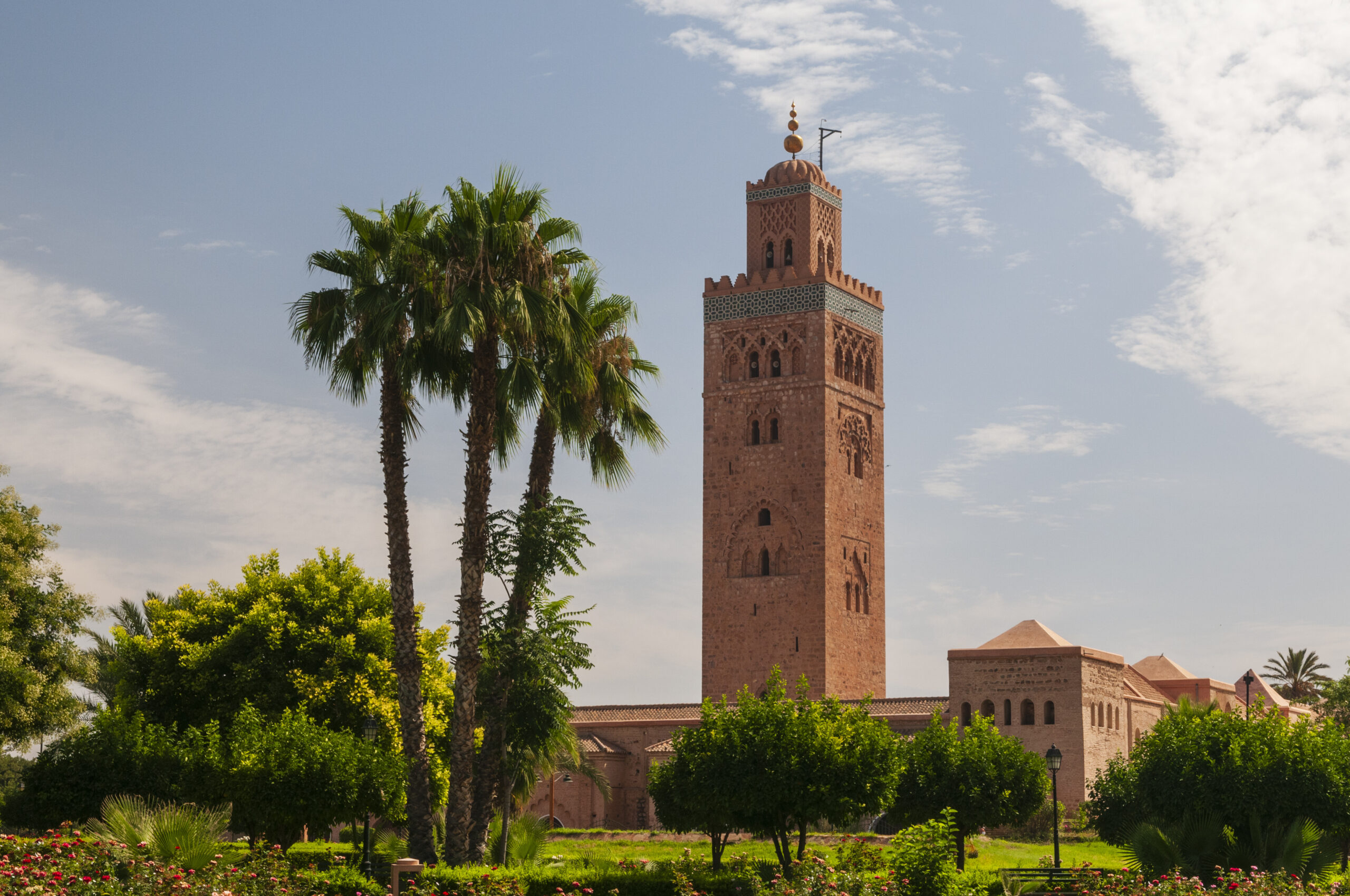
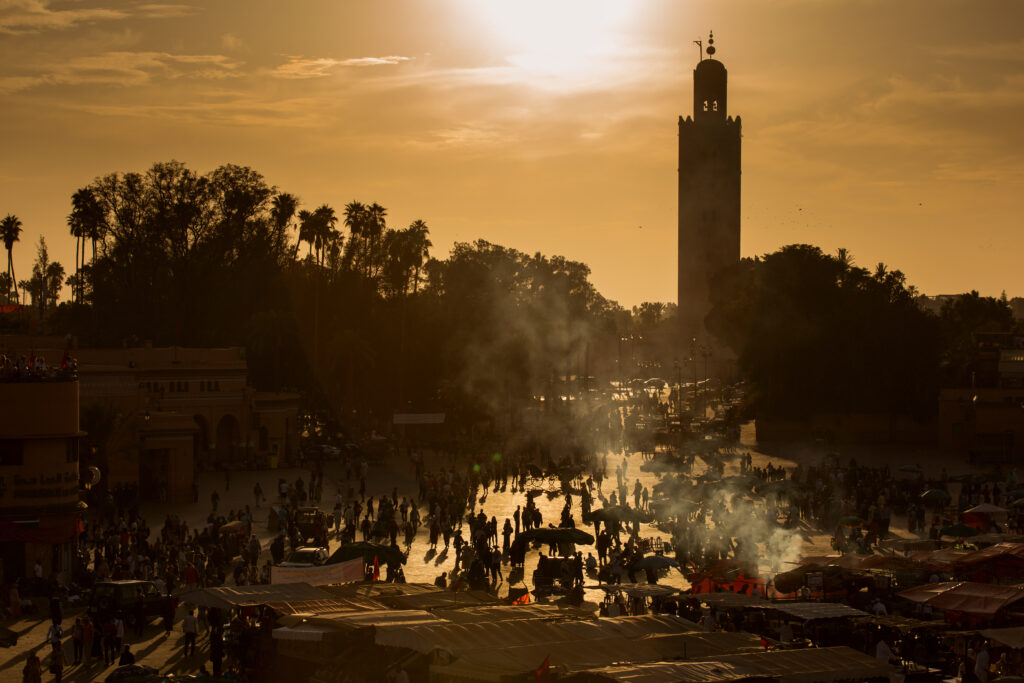
During the 12th century, under the Almohad dynasty, Marrakesh reached a peak of political and religious influence. Important religious and urban structures from this period still shape the city today, including the Koutoubia Mosque, which became a model for mosque architecture across the region.
In the 16th century, the Saadian dynasty brought renewed prosperity and artistic development. Palaces, religious buildings, and gardens were constructed, reflecting wealth and refined craftsmanship. Later periods continued to add to the city while preserving its foundations. Marrakesh’s history is defined by adaptation rather than replacement.
Atmosphere & Daily Life
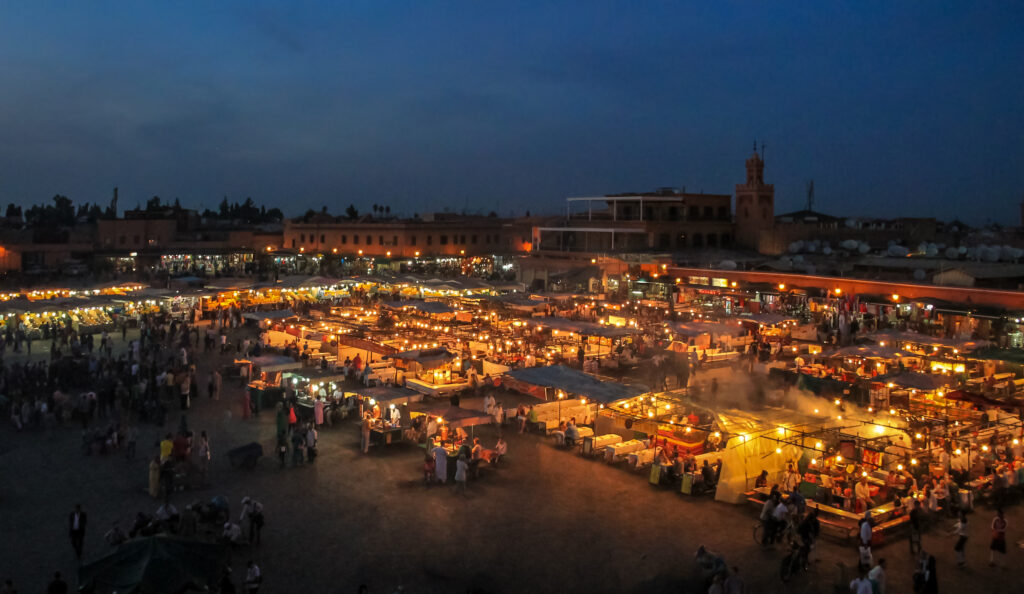
Daily life in Marrakesh follows a rhythm shaped by climate, religion, and social habits. Mornings begin early, with markets opening and daily tasks starting soon after sunrise. Afternoons slow down, especially during warmer months, while evenings become social and lively.
The historic medina is dense and communal. Homes, workshops, mosques, and shops exist close together, creating constant movement and interaction. Outside the old city walls, newer neighborhoods offer wider streets and a different pace.
Sounds are an essential part of the city’s atmosphere. Conversations, footsteps, and calls to prayer blend naturally. Moroccan expressions such as salam alaykoum, labas?, and bslama are part of everyday language and reflect values of respect and community.
Culture, Traditions & Local Mentality
Marrakesh reflects core Moroccan values such as hospitality, dignity, patience, and social connection. Family life plays a central role, and neighborhoods often function as close communities. Traditions are not separated from daily life; they are practiced naturally and passed on through habit.
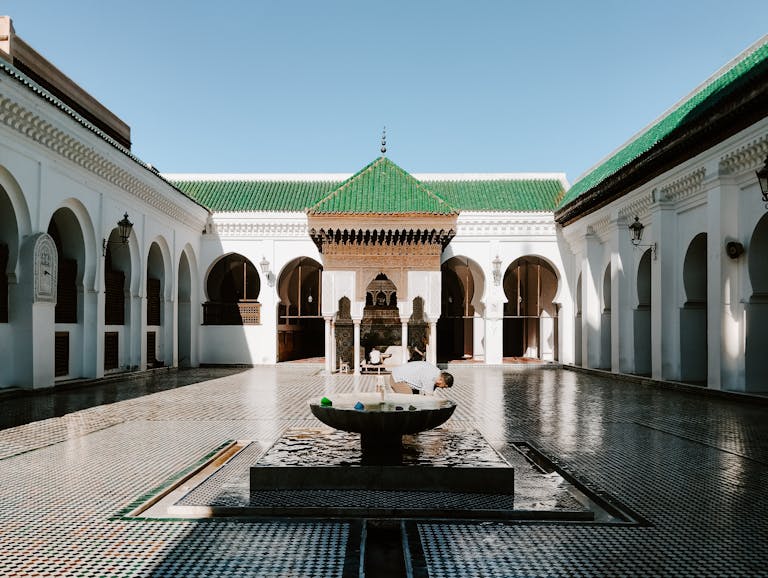
Religion shapes the rhythm of the day without dominating conversation. Prayer times structure daily schedules, and mosques remain integrated into residential areas. Craftsmanship, trade, and food culture continue through practice rather than formal display.
Visitors are generally welcomed when they show calm behavior, curiosity, and respect for local customs.
Weather & Best Time to Travel
Marrakesh has a semi-arid climate. Summers are hot and dry, while winters are mild with cooler evenings. Rainfall is limited and usually occurs during the cooler months.
Spring and autumn often offer more balanced conditions, while summer life adapts through early mornings, shaded spaces, and active evenings. Weather influences the city’s rhythm rather than stopping daily activity.
Understanding the climate helps travelers adjust their pace and expectations.
How to Get to Marrakesh
Marrakesh is one of Morocco’s main transport hubs. It can be reached by international flights, national train connections, and major road networks linking it to other cities.
Its accessibility has helped Marrakesh remain central to trade, travel, and cultural exchange throughout history.
Getting Around & Transport
Movement inside Marrakesh depends on the area. Walking is common in the medina, where streets are narrow and closely connected. Taxis and local transport are used for longer distances and travel between districts.
Understanding the general transport rhythm makes daily movement easier and more comfortable.
Accommodation in Marrakesh
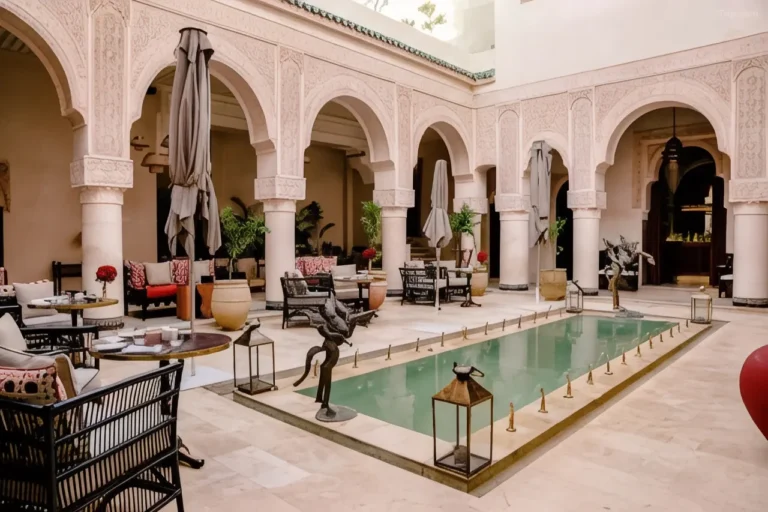
Accommodation in Marrakesh reflects the city’s diversity and history. Different areas offer different atmospheres, shaped by architecture, lifestyle, and urban layout.
The choice of area often affects how visitors experience the city’s rhythm and daily life.
Perfect Holiday Duration in Marrakesh
A short stay in Marrakesh offers a first introduction to its atmosphere and structure. Longer stays allow deeper understanding of daily routines, culture, and social rhythm.
Marrakesh is a city that reveals more with time and rewards slow observation rather than rushed movement.
Marrakech Dress Code & Culture
Dress in Marrakesh is influenced by culture, climate, and social norms. Modest and practical clothing is common, especially in traditional neighborhoods and religious surroundings.
Understanding local dress expectations helps visitors feel comfortable and respectful in different parts of the city.
Marrakesh for Solo Travelers, Couples & Families
Marrakesh welcomes different types of travelers. Solo travelers benefit from awareness and structure, couples often appreciate the city’s atmosphere and cultural depth, and families experience its strong sense of community.
The city adapts naturally to different visitors without changing its identity.
Safety Awareness in Marrakesh
Safety in Marrakesh is closely linked to awareness, behavior, and understanding local norms. Like any large city, it requires attention without fear.
Respecting daily rhythm and cultural practices contributes to feeling comfortable and secure.
Most Popular Excursions from Marrakesh
Marrakesh’s location allows access to mountain regions, valleys, rural villages, and desert-edge landscapes. These areas reflect the city’s historical role as a gateway between different environments.
They provide geographical context to the urban experience rather than contrast.
Final Reflection – Why Marrakesh Is Worth Understanding
Marrakesh is not defined by a single monument or experience. It is a city shaped by geography, history, belief, and everyday human life. Understanding it means accepting its rhythm and respecting its continuity.
For travelers who approach Marrakesh with patience and openness, the city offers depth, context, and a strong sense of place that remains long after the visit.

Leave a Reply