
Why Visit Rabat?
Rabat is the political and administrative capital of Morocco, yet it is often one of the country’s most misunderstood cities. While it does not seek attention like larger or more touristic destinations, Rabat plays a fundamental role in shaping modern Morocco. It is where institutions operate, decisions are made, and national life is organized.
People visit Rabat to understand Morocco in a balanced and structured way. The city offers a rare combination of history, calm daily life, and modern governance. Unlike fast-paced economic centers or heavily touristic cities, Rabat feels measured and composed. It is worth visiting for travelers who value cultural depth, clarity, and a quieter rhythm of urban life.
Where Is Rabat & Why Its Location Matters
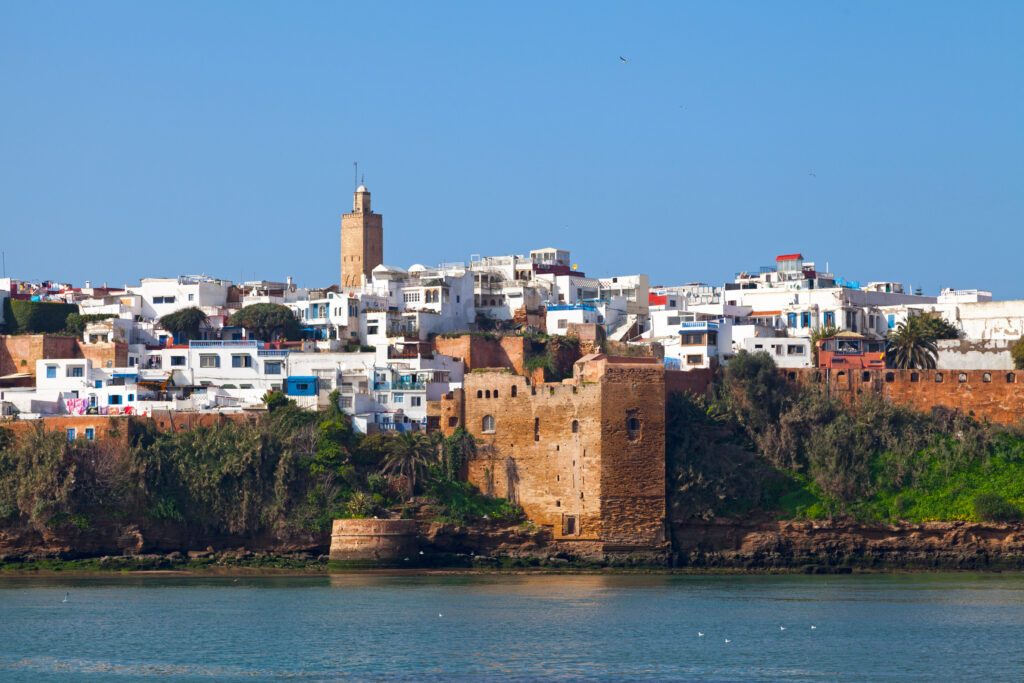
Rabat is located on the Atlantic coast of northwestern Morocco, at the mouth of the Bouregreg River. This position has shaped the city’s history, defense, and development. Facing the ocean while sitting beside a river gave Rabat both protection and access to maritime routes.
Historically, the Bouregreg River separated Rabat from the city of Salé, creating a strategic zone for trade, defense, and settlement. The Atlantic coast connected Rabat to international routes, while the river supported local movement and resources.
This geographic balance explains why Rabat developed as a fortified and organized city rather than a commercial hub. Even today, the city’s layout, green spaces, and coastal influence contribute to its calm and ordered atmosphere.
Short but Meaningful History & Cultural Context
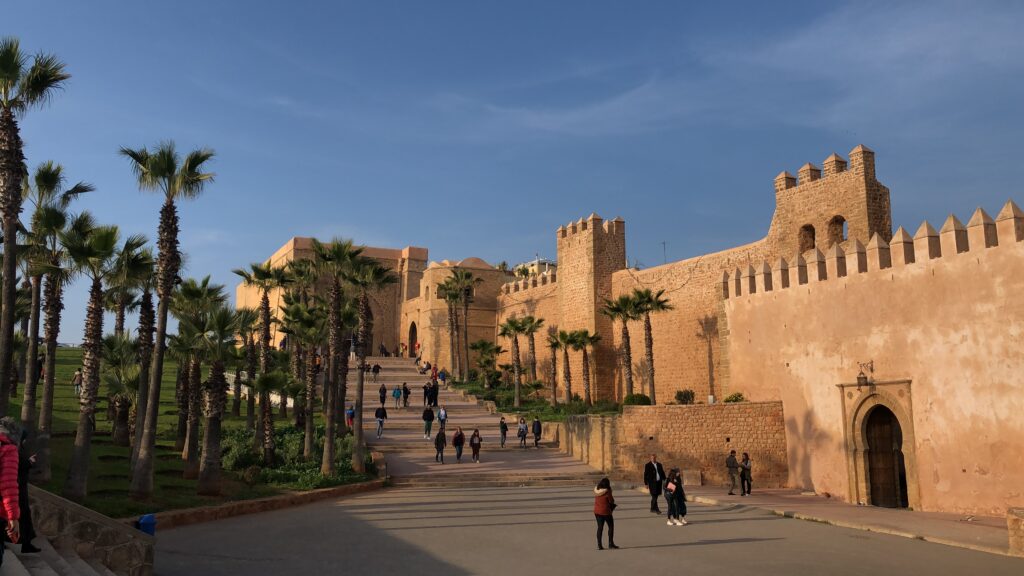
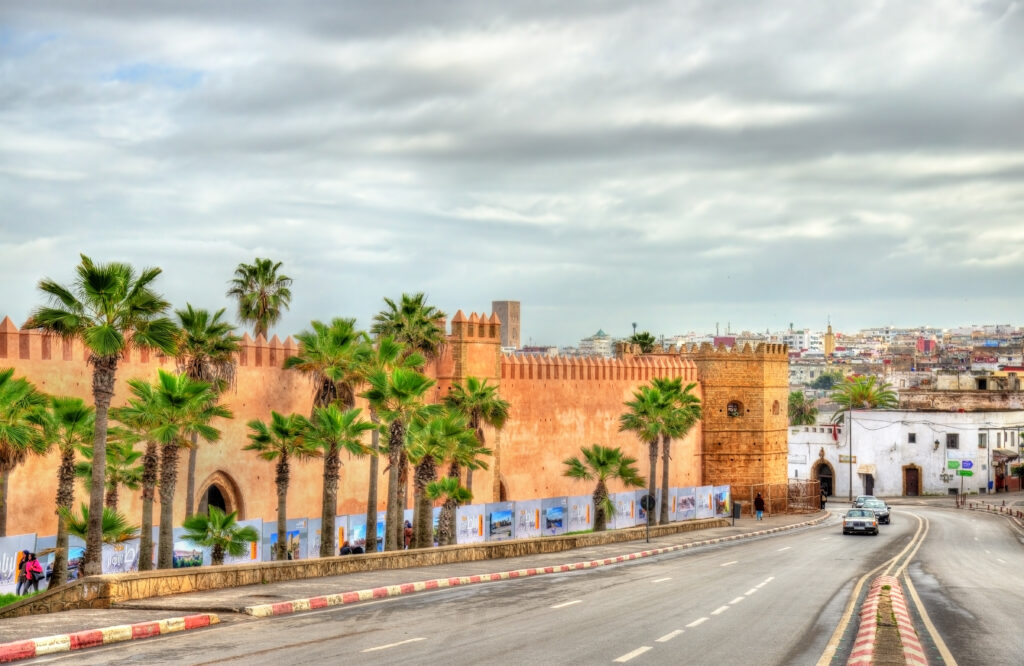
Rabat’s history dates back to the 12th century, when it was founded by the Almohad dynasty as a military and religious base. The city was designed to support imperial ambitions and coastal defense.
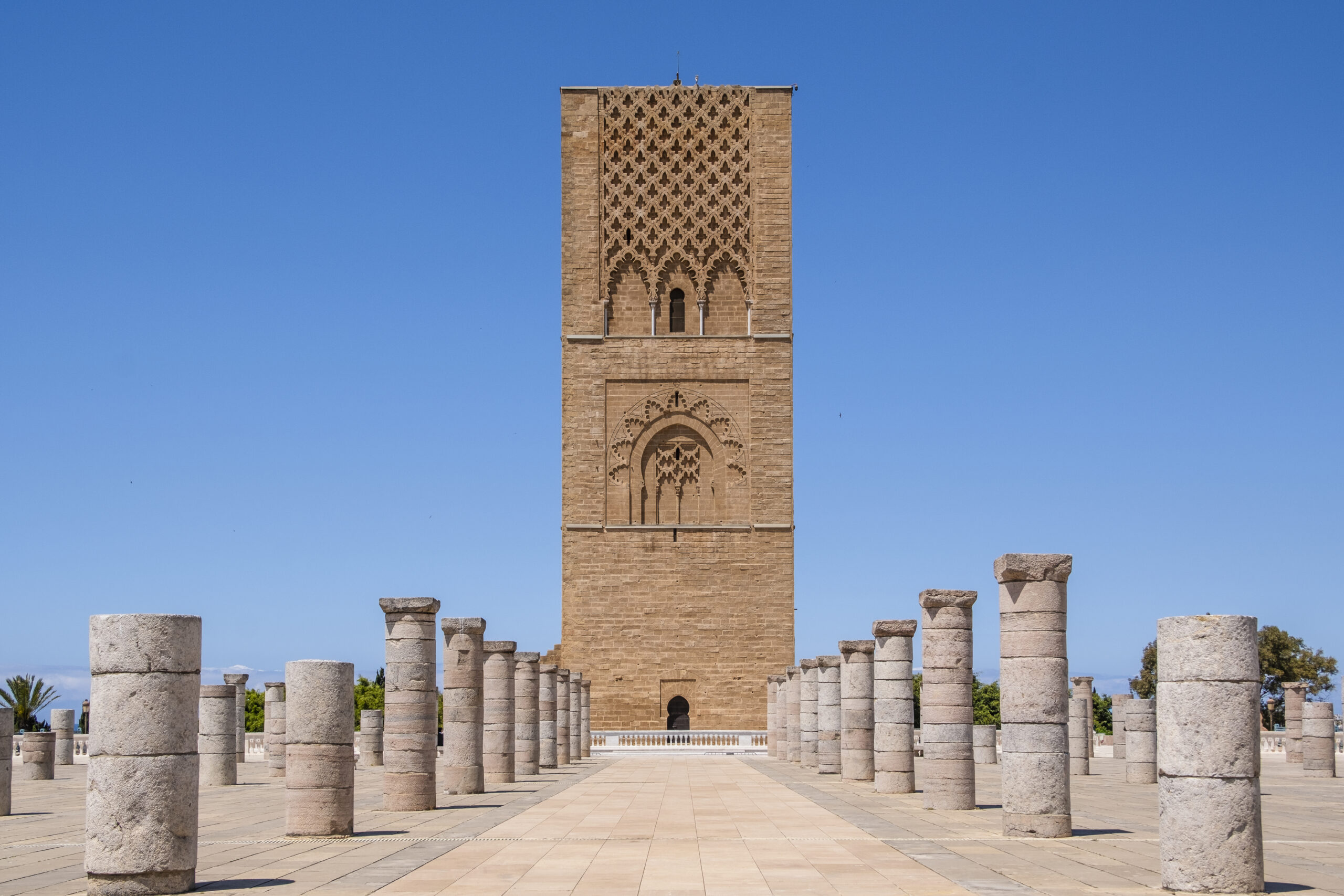
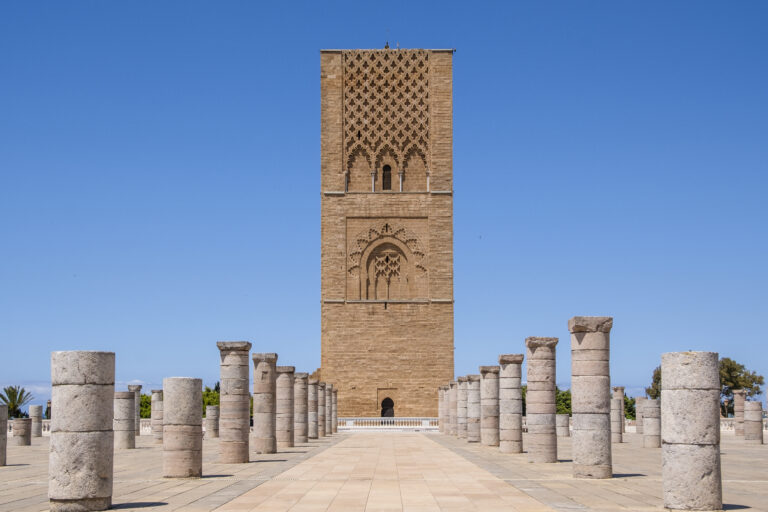
One of the most important symbols of this period is the Hassan Tower, originally intended to be part of a grand mosque complex. Although never completed, it remains a strong symbol of Rabat’s historical importance.
Later periods saw Rabat evolve as a royal city and administrative center. During the French Protectorate in the 20th century, Rabat was chosen as the capital, reinforcing its role as a city of governance rather than commerce. This decision shaped Rabat into the structured, institutional city it is today.
Atmosphere & Daily Life
Daily life in Rabat feels calm and organized. Mornings begin early, but without the rush seen in larger cities. Offices open, schools begin, and daily routines follow a steady pace.
Neighborhoods are generally clean, green, and residential. The presence of embassies, ministries, and public institutions influences behavior and urban planning. Public spaces feel orderly, and the city encourages walking and quiet movement.
Sounds are softer compared to other major cities. Conversations, traffic, and daily activity exist, but without constant pressure. Moroccan expressions such as salam alaykoum, labas?, and allah ykhalik are part of everyday exchanges, reflecting politeness and social respect.
Culture, Traditions & Local Mentality
Rabat reflects a mentality shaped by education, public service, and institutional life. Many residents work in administration, diplomacy, or education, which influences the city’s tone and social behavior.
Cultural values such as respect, discretion, and courtesy are strong. Traditions remain present, but they adapt to modern professional life. Religious practices continue naturally, shaping daily rhythm without dominating public space.
Visitors often find Rabat welcoming but reserved. Interactions are polite and respectful, and the city values calm behavior and cultural awareness.
Weather & Best Time to Travel
Rabat has a mild Atlantic climate. Temperatures remain moderate throughout the year, with cool ocean breezes helping regulate heat. Summers are comfortable compared to inland cities, while winters are mild with occasional rain.
Rainfall is more common during winter months, but overall weather remains stable. Because of this climate, Rabat can be visited year-round without extreme conditions.
Weather supports outdoor movement, public life, and a generally relaxed daily rhythm.
How to Get to Rabat
Rabat is easily accessible due to its status as the capital. It is connected by train to major Moroccan cities and by road networks that link the north and south of the country.
Its proximity to other major urban centers makes Rabat well integrated into national transportation systems.
Getting Around & Transport
Rabat is relatively easy to navigate. Distances are manageable, and movement includes walking, taxis, trams, and local transport. The city’s layout supports smooth circulation and reduced congestion.
Daily transport follows working hours, but traffic is generally less intense than in larger metropolitan areas.
Accommodation in Rabat
Accommodation in Rabat reflects its administrative and residential character. Different neighborhoods offer different atmospheres, from central districts near institutions to quieter residential areas.
The choice of area influences daily rhythm, access to services, and overall experience of the city.
Perfect Holiday Duration in Rabat
Rabat does not require a long stay to understand its character. Short stays allow visitors to grasp its atmosphere and cultural structure, while longer stays offer deeper appreciation of daily life and institutional rhythm.
Rabat is best experienced with a calm pace and attention to detail.
Rabat Dress Code & Culture
Dress in Rabat is generally modest and professional. Urban clothing, work attire, and simple casual styles are common. Compared to other cities, Rabat tends to be more conservative in appearance, especially around institutions.
Respectful and practical clothing aligns well with local expectations and social norms.
Rabat for Solo Travelers, Couples & Families
Rabat suits a wide range of travelers. Solo travelers appreciate its safety and structure, couples enjoy its calm atmosphere, and families benefit from green spaces, order, and accessibility.
The city’s stability makes it comfortable for different travel styles.
Safety Awareness in Rabat
Rabat is considered one of Morocco’s safest major cities. Safety is supported by institutional presence, organization, and calm daily life.
Basic awareness and respect for local norms are usually sufficient for visitors to feel comfortable.
Most Popular Excursions from Rabat
Rabat’s location allows access to coastal areas, historic towns, and inland regions. These surroundings provide context to the city’s role as a capital rather than defining it.
Nearby environments highlight the balance between governance, history, and geography.
Final Reflection – Why Rabat Is Worth Understanding
Rabat is not a city of spectacle. It is a city of structure, balance, and continuity. Understanding Rabat means understanding how Morocco organizes itself politically, culturally, and socially.
For travelers who value calm exploration, institutional history, and a clear sense of national identity, Rabat offers insight, stability, and depth.

Leave a Reply